Deck & Patio Cleaning in Wilmington, NC
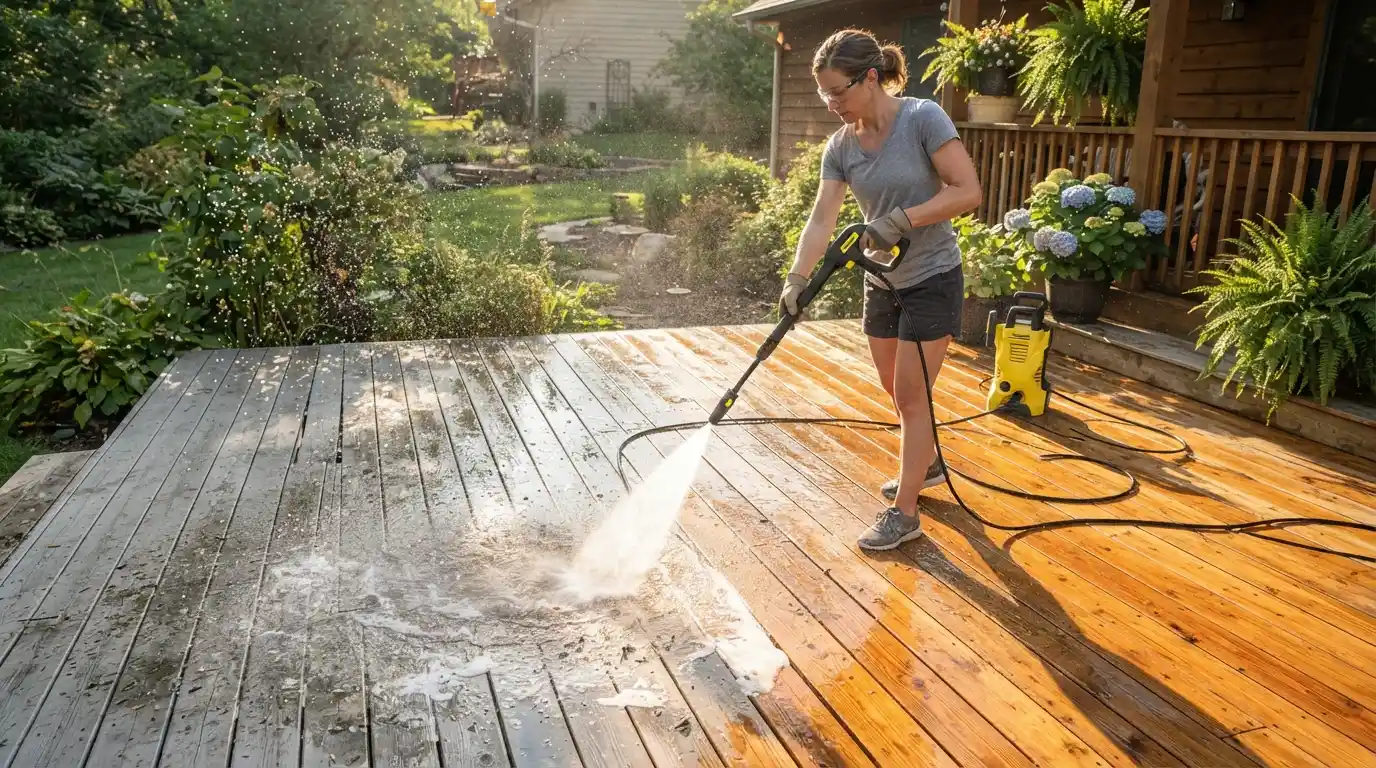
A deck that has gone gray, green and slick is not just old, it is holding moisture and mildew in the grain that a pressure washer only drives deeper. We soft wash wood and composite decks clean without gouging the boards or furring the wood. Flat price, same day response.
Tap to call now (472) 281-1810Get Your Free Deck Cleaning Estimate
Why your deck goes gray, green and slippery here
Deck cleaning is the low pressure cleaning of wood, composite or vinyl decking to remove the mildew, algae and gray weathering that build up on the surface and settle into the grain. It is not a job for a high pressure wand, because on soft wood that force carves grooves and lifts the grain, leaving a fuzzy, damaged surface that soaks up even more water.
Wilmington is hard on a deck. Salt air and high coastal humidity keep the boards damp, and shade from the live oak canopy stops them drying out. On wood, the sun breaks down the lignin that holds the surface together and turns it silvery gray, while the constant damp grows the green algae and black mildew that make a deck dangerously slick underfoot.
The right way to clean it is a soft wash, the same gentle thinking we use on siding. A cleaning solution at low pressure lifts the mildew and gray out of the grain and kills the algae at the root, without the gouging and furring a pressure washer leaves behind. Matching the method to the board is the whole job, on a deck just as much as on a roof.
What we clean during a Wilmington deck cleaning
If you have searched for deck cleaning, deck washing or deck power washing in Wilmington, the key is a soft wash that lifts the gray and mildew, not a pressure blast that gouges the wood.
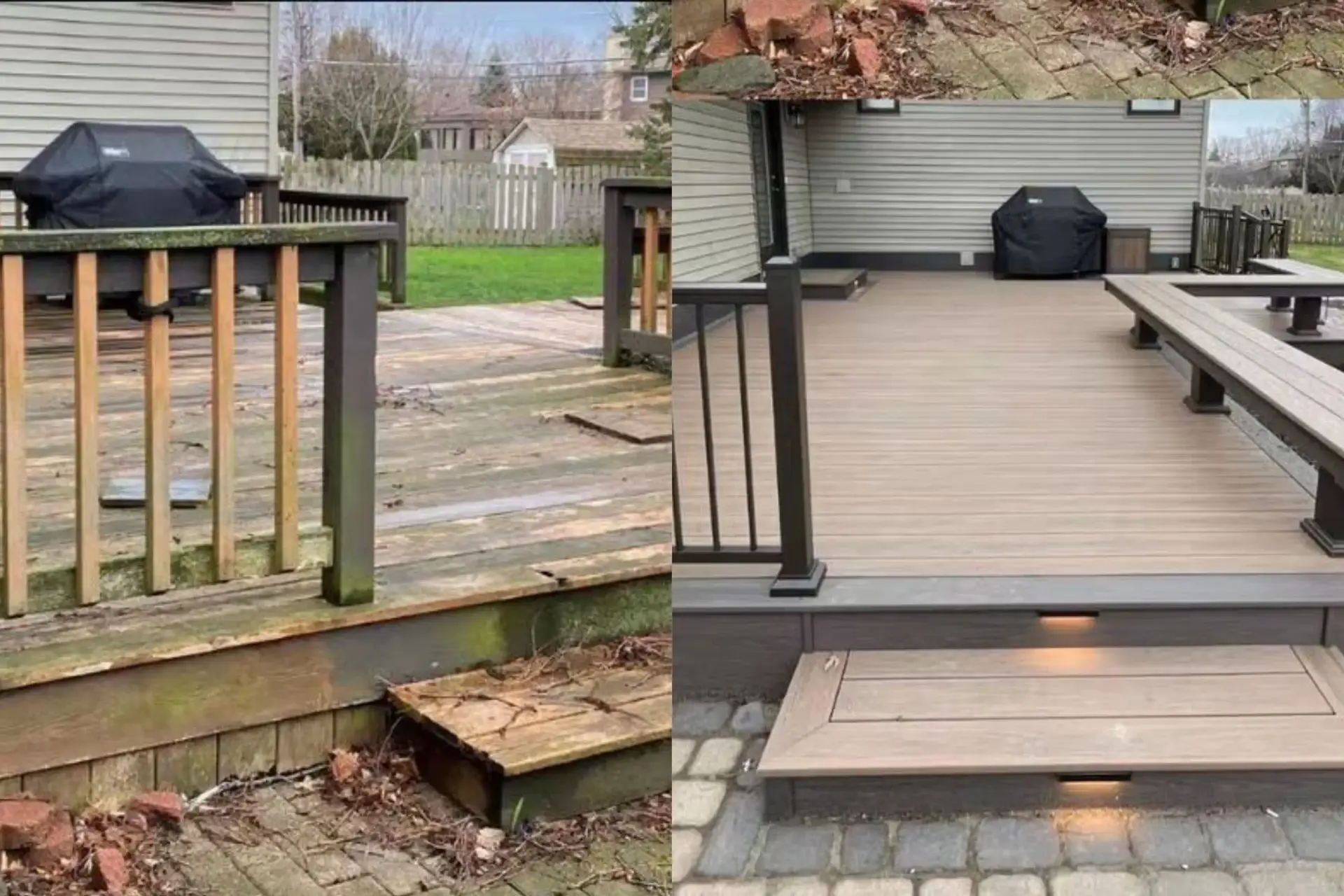
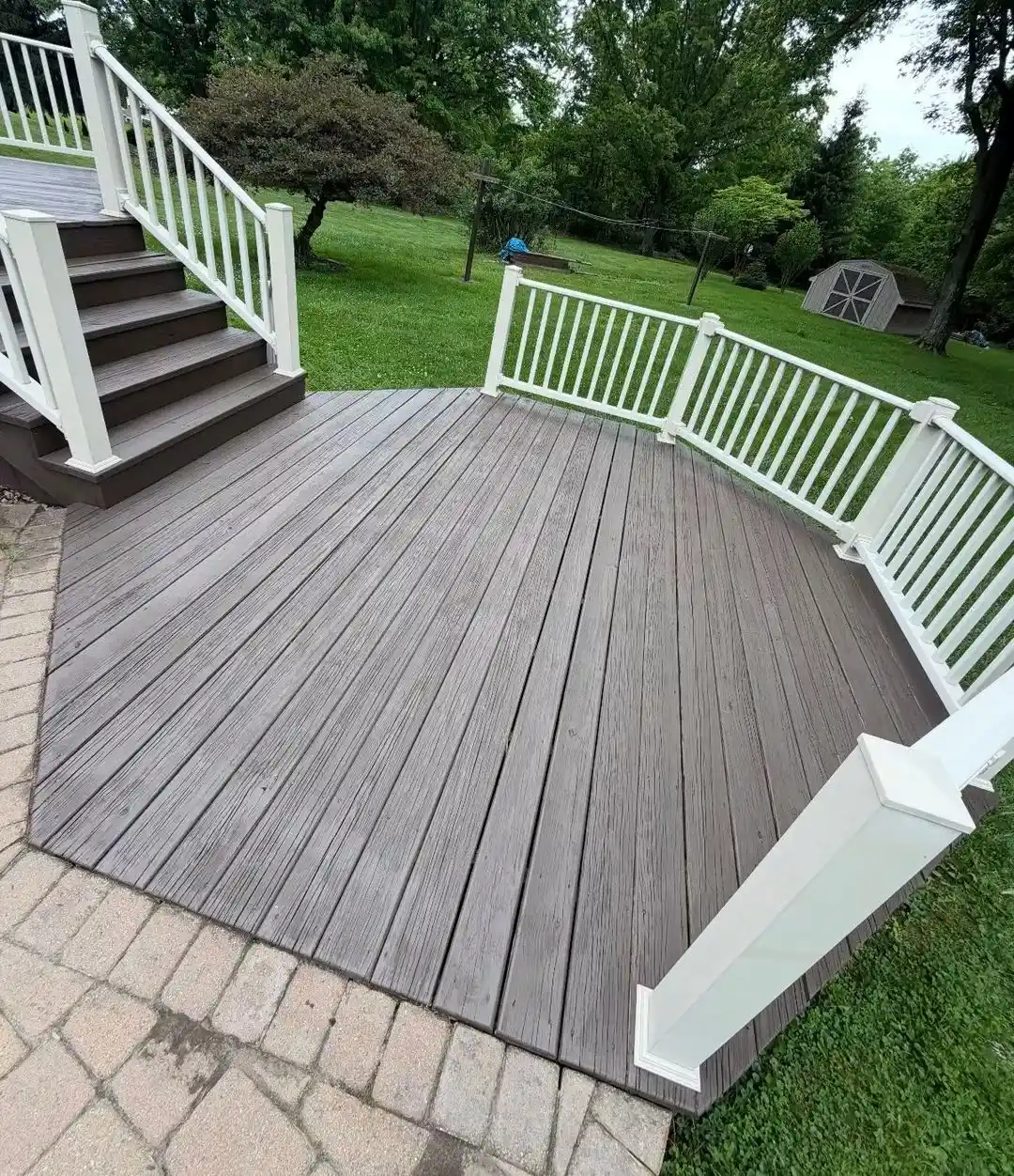
Recent deck cleaning projects around Wilmington
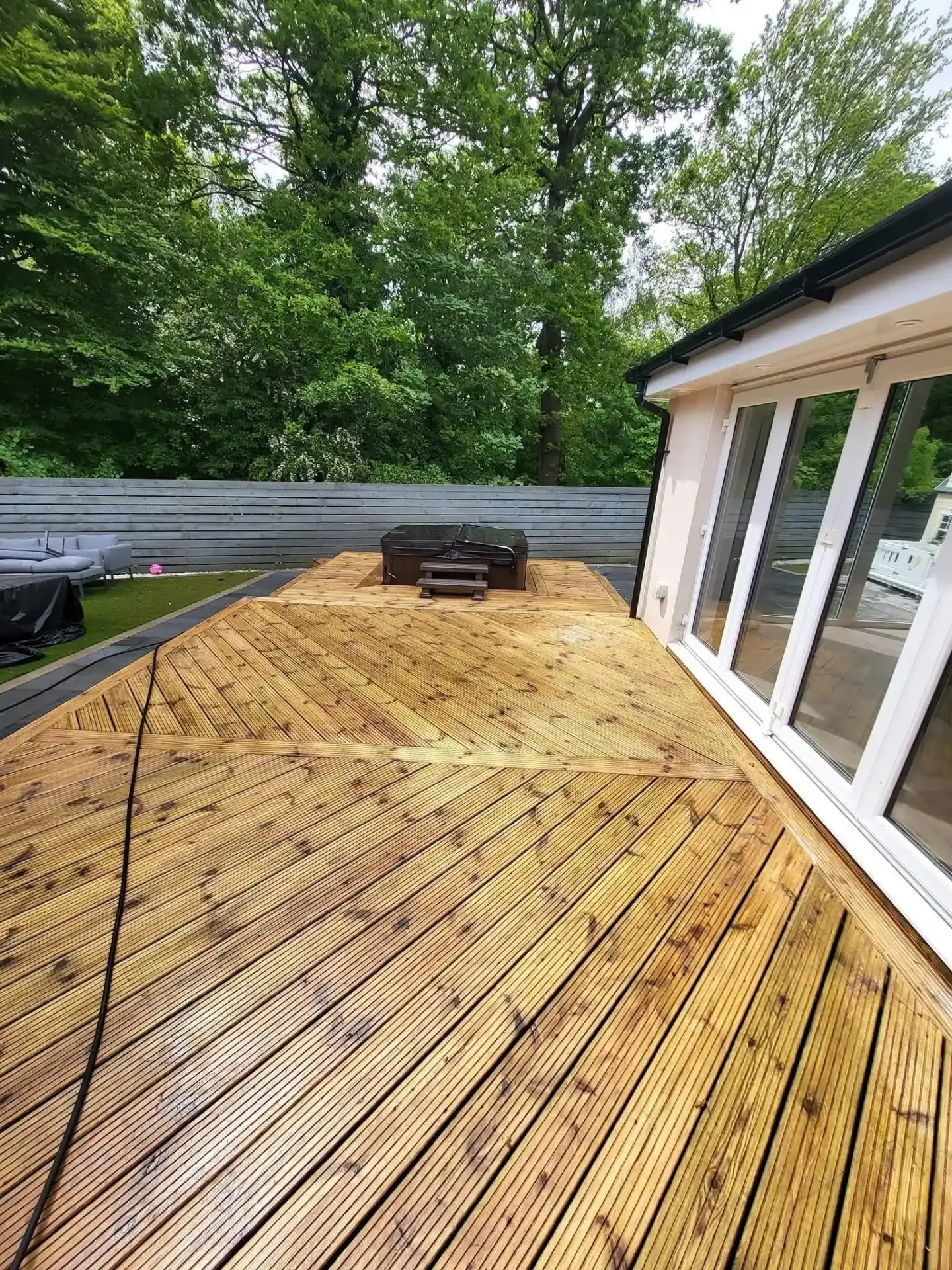
A few of the decks we have brought back lately. Replace these with your own before and after photos from real jobs as you complete them.
How deck cleaning actually works, step by step
A clean, safe surface is about method, not pressure. Here is how we lift the gray and mildew without damaging the boards, step by step.
We protect the plants and space first
Every plant, shrub and patch of grass around the deck is soaked with water first and rinsed after. Furniture and grills are moved clear so every board can be cleaned properly.
A soft wash solution goes on at low pressure
A cleaning solution is applied at low pressure to lift the mildew and gray weathering and kill the algae at the root. It is the chemistry that does the work, not force, which is what keeps the wood grain intact.
The solution dwells, then a gentle rinse
It sits long enough to break down the growth and lift it from the grain, then we rinse gently. Wood is cleaned with the grain, never blasted across it, so the surface comes up clean and smooth, not furred.
We detail the railings, stairs and edges
Spindles, handrails, stair treads and the board ends are done by hand so the whole space is clean and safe, not just the open floor. The slick spots are exactly where safety matters most.
The result is a deck that looks bright again and is safe underfoot, with the wood grain intact and the algae dead at the root. That is the difference between soft washing and a pressure wash that gouges the boards and leaves the mildew to grow back.
Why homeowners here trust us with their deck
Soft wash, never gouged
Your deck never sees a high pressure wand from us. Soft washing lifts the gray and mildew without carving grooves or furring the wood the way pressure does.
Wood and composite, done right
Pressure treated, cedar, hardwood or composite, each gets the right solution and touch. One setting for every board is how decks get damaged.
Flat price, no surprises
A flat number before we start and the invoice matches it. No starting at pricing, no hourly billing, no number that grows on invoice day.
We know Wilmington decks
Landfall canopy gray, Wrightsville salt, Masonboro composite. We know what weathers what, because we work these neighborhoods every week.
Plant safe, every single time
We soak and protect your landscaping and move the furniture before we start, so the solution never sits on your beds or lawn.
Before and after photos
Every job documented. You see the deck come back, and HOA boards get a written record they can accept if your deck was cited.
The weathering and growth we lift off Wilmington decks
Most decks we clean here have several of these at once, and the wood ones run deep into the grain. Coastal damp and canopy shade let them build faster than most people expect, which is why a deck can look years old in just a couple of seasons.
Common deck problems we clear in one visit
A soft wash lifts all of it out of the grain in one visit without gouging the wood, which is why the deck comes up clean, smooth and safe to walk on.
Complete the job
Most homeowners pair a deck clean with a house wash in the same visit. It costs less than separate trips, and the house is washed first so the deck is the last thing done and comes up spotless.
Deck cleaning across Wilmington and New Hanover County
We soft wash homes in every neighborhood on the coast, and we know what weathers each one, from canopy gray to oceanfront salt. No travel charge anywhere inside New Hanover County. HOA cited your deck? We move fast and provide documentation you can submit straight to your board.
Deck cleaning questions Wilmington homeowners ask
How much does deck cleaning cost in Wilmington NC?
Will pressure washing damage my wood deck?
Can you clean a composite or Trex deck?
Why is my deck so slippery?
How often should I clean my deck in Wilmington?
Ready to get your deck bright and safe again?
Flat price. Same day response. A soft wash that lifts the gray without gouging the boards. Serving Wilmington and all of New Hanover County.
(472) 281-1810